
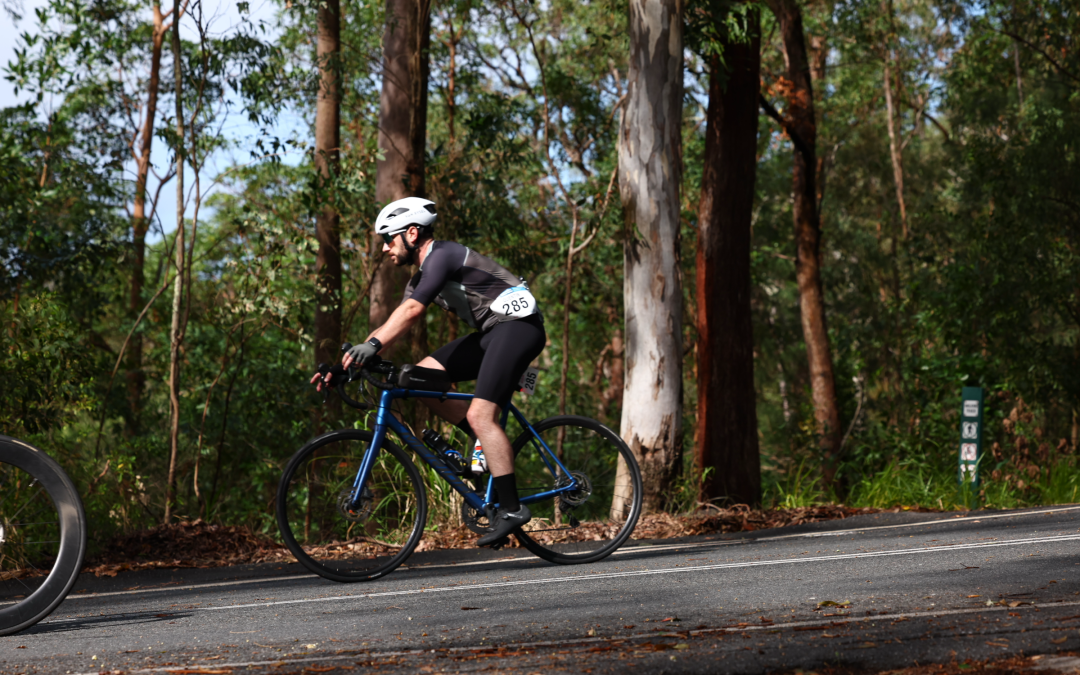
I love cycling. I did a bit of competition when I was a kid, and it did stick with me. Today, I am training for what will probably be my biggest ride challenge ever. And to prepare, I use Strava.
If you don’t know Strava, it is an app where people upload their training sessions to track their performance over time. At its best, it helps people doing sports understand their own progression: how they are evolving, what works, and where their limits lie.
But over time, Strava has drifted away from that purpose – or rather, the way we use it has drifted.
What increasingly defines “success” on the platform is not whether someone is improving, but how they rank compared to others. Leaderboards, segments, and absolute numbers encourage constant comparison between people with very different bodies, training histories, time availability, and life constraints. In extreme cases, some people even pay others to run, ride, or swim for them just to show results on the platform.
That alone should tell us something is wrong.
Sport is good for health.
But when comparison becomes the objective, the system loses its sanity.
The outcome is predictable. People train seriously, improve consistently, and still feel like they are failing – simply because they are comparing themselves to riders with completely different capacities.
The Right Comparison Is With Yourself
In sport, the only comparison that truly makes sense is with yourself.
Am I stronger than last year?
Do I recover better?
Can I ride longer, climb more, pace myself better?
Progress is about trajectory, not position on a leaderboard.
Comparing yourself to others may be entertaining, but it tells you very little about whether you are actually improving. It mixes effort, capacity, and context into a single number and then calls it performance.
Strava becomes problematic precisely when we forget this distinction.
Soil assessment often repeats the exact same error, but in a more subtle way.
In many frameworks, soils are not compared through a single universal benchmark, but through benchmarks defined by land-cover or land-use categories. Forest soils are compared to other forest soils, cropland soils to cropland soils, grassland soils to grassland soils. Indicators are then aggregated to produce average reference values.
At first glance, this seems reasonable.
But within each land-cover category lies an enormous diversity of soils with very different intrinsic or natural capacities. Deep, fine-textured soils and shallow, coarse-textured soils are often grouped together simply because they share the same land cover.
When average benchmarks are derived from this mixture, soils with naturally lower capacity are implicitly judged against soils with much higher capacity, even though they belong to the same category.
Comparison replaces understanding.
Shallow soils or coarse-textured soils are then labelled unhealthy or degraded because they fall below an average they were never capable of reaching. The soil is not compared to itself, but to an aggregate reference shaped by very different soils.
This is the soil equivalent of grouping cyclists by discipline, averaging their performances, and then judging every rider against that average, regardless of body type, training history, or physiological limits.
Capacity Is Not the Problem
Not all cyclists are meant to reach the same numbers.
Not all soils are meant to perform the same functions at the same level.
Capacity is not something to fix, it is something to recognise.
When we ignore natural capacity, we confuse natural limits with poor management. A soil can be well managed, stable, and functioning properly, yet still “fail” an assessment simply because the benchmark is wrong.
From Comparing Soils to Tracking Soils
What soils need is the same thing athletes need: self-comparison over time.
The condition of a soil should be assessed relative to:
- its own intrinsic properties (such as organic matter or pH),
- its own history,
- and its own realistic upper limit: its capacity.
Improvement means moving closer to what that soil can realistically achieve, not towards an abstract ideal defined elsewhere.
This shifts the focus from status (how a soil looks compared to others) to condition (whether it is improving, stable, or degrading).
Conclusion: Stop comparing yourself to others — progress is personal.
I started this with cycling for a reason.
I am training for a long, demanding ride. I know I have the capacity to do it, but I also know I am not there yet. Strava helps me when I use it properly, not to compare myself to others, but to answer the only questions that matter: am I progressing, am I becoming more resilient, am I moving closer to what I can realistically do?
Strava becomes a problem the moment I stop comparing myself to myself.
Soil assessment faces the exact same risk.
When we judge soils the way Strava leaderboards judge cyclists, we stop seeing progress. We stop seeing stability. We stop seeing good management. All we see is whether a soil resembles to an average value of soils that it was never meant to resemble.
If, instead, we judged soils the way we should use Strava, by tracking their own evolution over time, we would reach very different conclusions.
A soil does not need to win a race.
It needs to remain functional, stable, and secure within its own limits.
Just as my training is not about beating others, but about reaching my own goal, soil stewardship is not about making all soils perform the same way. It is about helping each soil reach its potential.
When we get the comparison right, both cycling and soil science start to make sense again.